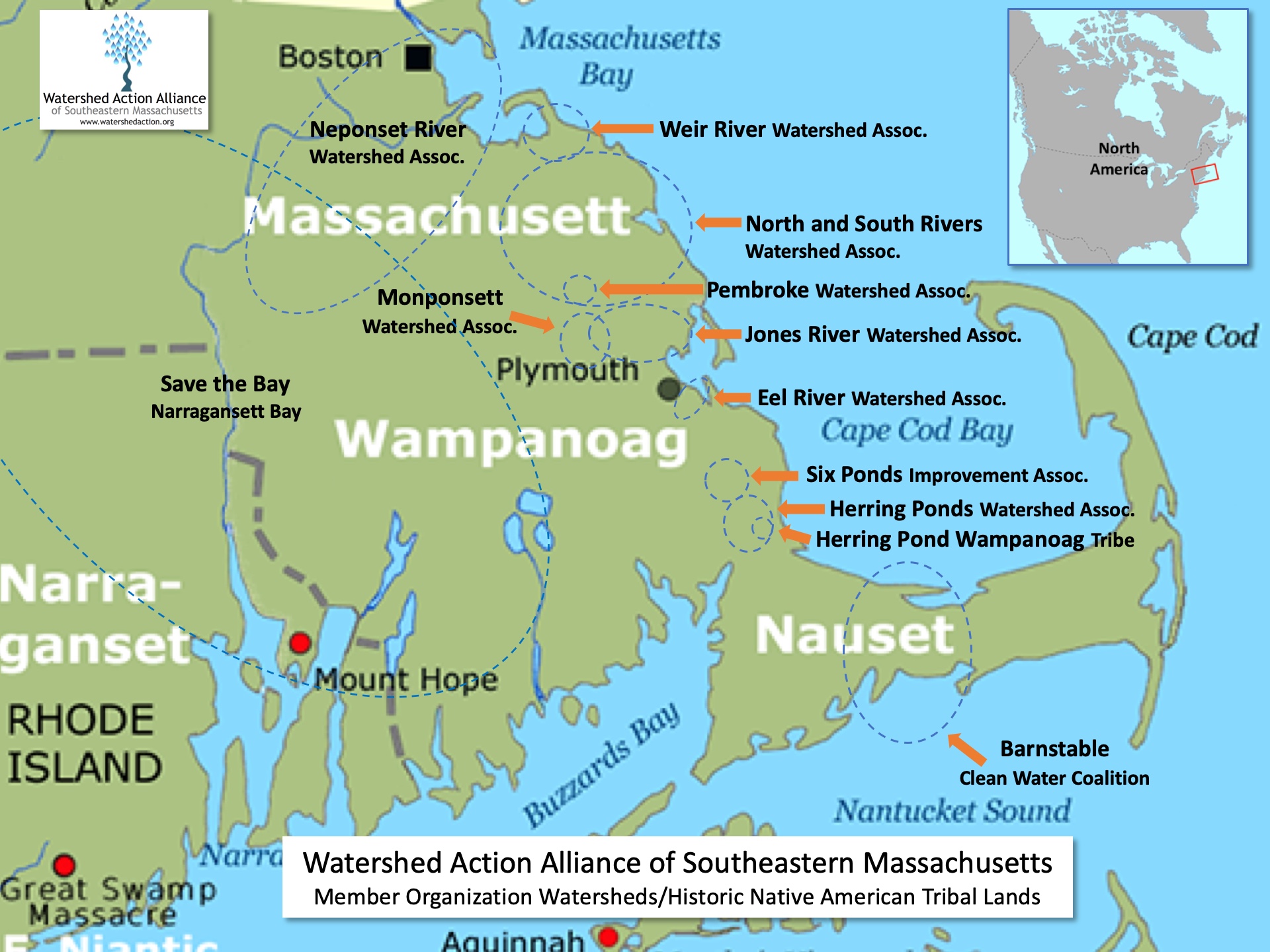

What Watershed is Your Town In?Test Your Environmental IQ: Test-Your-Environmental-IQ.pdf Southcoastal Watershed Action Plan: Southcoastal.zip 27 MB Herring Kiosk Reservations Contact Steve Pearlman: Email:pearlman@neponset.org Phone: 781-575-0354 ext. 304 |
|
|
The mission of the Watershed Action Alliance (WAA) is to protect and restore the watersheds of Southeastern Massachusetts through strategic collaboration and grassroots efforts. The Alliance also serves to strengthen the individual and collective capacity of its member groups, enabling them to be more effective watershed advocates. The Alliance focuses on accomplishing the following three goals via public education and public policy advocacy:
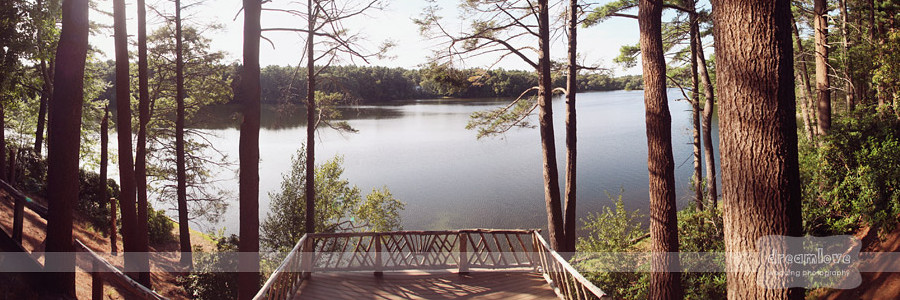
More and More Rivers and Streams are Running DryWhy is it Happening and What Can Be Done About It?Most watersheds in southeastern Massachusetts suffer from low streamflows. The Weir, Taunton, North and Neponset River Watersheds are all rated as “highly” or “moderately stressed” by the state. Most other rivers, streams and ponds, including the Jones River pictured above, are “unassessed,” meaning that they are afforded no special protections despite the fact that local citizens can attest to the flow problems they face. Global warming will only make things worse.Low streamflows kill fish and wildlife, limit recreational opportunities, and can significantly increase water pollution by concentrating pollutants like bacteria and excess nutrients in lower volumes of water (a drop of arsenic in a cup can kill you, but a drop in a lake is perfectly safe). Lack of rain is not the problem; Massachusetts gets plenty of rain. Legitimate uses of our public water supply are not the problem. Lack of strong state and federal laws is not the problem. So what seems to be the problem? Low streamflows are caused by depleted groundwater from underground “aquifers,” which provide the only source of water our rivers and streams have during dry weather. In a natural water cycle, rain sinks into the ground and replenishes our aquifers, which slowly release it to lakes and streambeds all year long, but a number of wasteful actions and irrational policies are disrupting this natural cycle:
Is Water Conservation Just Another Fad? Can My Family Really Do Anything Anyway to Make a Difference?More and more southeastern Massachusetts rivers and streams are running dry or close to it every year. Nearly all our communities are now placing restrictions on outdoor watering in the summer. As the fastest growing region in the state, demand for water can only increase. Constructing new wells and treatment plants can cost multiple millions, and in most cases only means putting another straw in the same underground “aquifers” that are already running dry. More pumping does not provide “new” water, but it further reduces stream flows and harms critical natural habitats. Reducing water demand by increasing water efficiency and eliminating waste will cost far less and be more environmentally sound.Your family (individually and together with your neighbors) can help maintain our drinking water supplies and ensure that rivers, streams and ponds have enough water for fish, wildlife and boating. Here are some frequently asked questions about water conservation: Won’t conserving water demand changes in my family’s lifestyle?Not in the least. The most effective way to conserve water is simply not to waste it. Did you know that if you water your lawn between 8 a.m. and 6 p.m., most of it just evaporates into the atmosphere? Or that your lawn will be no greener if gets more than 1 inch of water (including rain) per week? How much sacrifice does it take to turn off the faucet when you’re brushing your teeth or to not run your washing machine until it is full? Using water efficiently will also lower your water bills!How does my family’s water use affect the water in streams and ponds?In a natural water cycle, rainfall soaks into the ground and replenishes the “aquifers” that provide most of our water supply. Since water flows downhill whether it’s above or below the surface, groundwater slowly and steadily flows into our streams and ponds (that’s why there’s still water in them when it hasn’t rained for awhile). When we pump too much water out of an aquifer and fail to replenish it, surface water levels drop. Less water in streams and ponds also makes pollutants more concentrated and more dangerous.What are the most effective things I can do at home to conserve water?Outdoors: Overwatering lawns uses huge quantities of water during the driest time of the year. Watering two days a week before 8 a.m. or after 6 p.m. is all you’ll ever need to keep a healthy attractive lawn. Use no more than 1 inch of water a week, including rain (just put a plastic cup in the ground near your sprinkler to see when you’ve reached that level).Indoors: Here, in order, is what uses the most water and what you can do to stop wasting it:
How can I work with my neighbors to ensure that my community is not unnecessarily wasting water?Local watershed associations are urging state and local officials to crack down on people and companies that waste large amounts of w ater. Please join them!
Runoff of Polluted Rain WaterMajor Contributor to Water Shortages and Low Streamflows Responsible for 60% of Massachusetts Water PollutionRunoff of polluted rain water (also known as “stormwater”) contributes to water shortages and low streamflows as well as flooding. Once a natural area is paved or a building is put up, 16 times as much rain runs off into rivers and streams, causing a rapid storm surge and sometimes flooding, instead of gradual replenishment (“recharge”) of groundwater. If adequately recharged, groundwater is slowly but steadily released into rivers and streams over the course of the year. During dry periods, the entire flow of a river may be from groundwater.Stormwater Pollution. Once upon a time, water pollution was caused mainly by large companies spewing out industrial wastewater and cities discharging untreated sewage into our rivers and streams. But thanks to the federal Clean Water Act (and the hard work of river advocates), those discharges are now highly restricted. Today, stormwater runoff from paved areas, rooftops and other “impervious” surfaces is responsible for 60% of the water pollution in the state. This consists of bacteria from dog and other animal poop; excessive nitrogen from lawn fertilizers (which leads to nuisance water plants and algae), toxic herbicides and pesticides from farms, lawns and gardens; and oil, gas and trash from streets and parking lots. Every watershed in southeastern Massachusetts has rivers, streams and estuaries that violate one or more state Surface Water Quality Standards, largely due to stormwater runoff. Proper Stormwater Management can greatly reduce these problems. Many watershed associations are working to get towns and cities to adopt strong stormwater management bylaws (either as a state requirement or as a local option) and you can help them do this in your town! Here’s what local bylaws can do:
What you can do at home to reduce stormwater runoff:
Is Freshwater So Plentiful in Southeastern Massachusetts That We Can Dump Millions of Gallons a Day into the Ocean?Did You Know That:
In nature, rainwater soaks back into the ground, “recharging” underwater aquifers that slowly but steadily discharge to rivers and streams; in hot, dry weather it’s the only water source they have! Today, though, much of this rain “runs off” paved surfaces rather than replenishing our groundwater. Wasteful and unnecessary water use also results in these aquifers being over-pumped for public water supply. There are four solutions to this critical problem: more water conservation, better stormwater management, fixing broken sewer pipes, and “recycling” wastewater to the ground after it has been treated. Like newspaper and plastics, water can be safely and cheaply recycled after it has been used. Just as the recycling movement began with ordinary citizens convincing their municipal officials to act, “Keeping Water Local” is the next big green initiative that you can be involved in.
What’s being done locally that you can help with?In Plymouth, the Eel River Watershed Association is trying to make the new Plymouth Rock Studios recycle the 166,000 gallons per day of water it will take out of the aquifer by treating and disposing of it on-site. The Association needs your help if you live in Plymouth.The Neponset River Watershed Association has worked to improve septic maintenance in Walpole as an alternative to extending sewers. It also helped convince the Patriots to recycle their wastewater at Gillette Stadium. NepRWA has published a booklet entitled “Minimizing Municipal Costs for Infiltration & Inflow Remediation.” Copies can be obtained at http://www.neponset.org/Publications.htm - click on “NepRWA I-I (Infiltration/Inflow) Handbook”. Make sure your local Department of Public Works has a copy! Save the Bay/Narragansett Bay has worked for nearly four decades advocating for wastewater management improvements. Contact them to learn what you can do to help. The Taunton River Watershed Alliance is addressing the problem of low stream flows and depleted water supplies by studying the overall “water balances” that exist in 100 different areas of their watershed (so-called “sub-watersheds”), in order to understand which areas are experiencing a net gain or loss of water and to what degree. A natural water balance is one where local groundwater aquifers, rivers, and streams are being replenished to the same extent as they would be under purely natural conditions. Water balances are determined by looking at water supply withdrawals, wastewater disposal practices, and management of stormwater “run off” from roads, parking lots and other hard surfaces. The Alliance’s studies should help towns improve development and redevelopment designs while maintaining ecological integrity in the watershed. Contact the Taunton River Watershed Alliance for details. See what watershed(s) your town is in.Obsolete Dams in Southeastern Massachusetts Need to Be RemovedToday there are 3,000 dams in Massachusetts, of which 606 are located in the southeastern part of the state. Most of these dams are relics of our mill industries, no longer have any human benefit and are causing untold harm. Obsolete dams:ENDANGER PUBLIC SAFETY
BLOCK MIGRATORY FISH
DEGRADE RIVERS
REDUCE OUTDOOR FUN
COST MORE TO MAINTAIN THAN TO REMOVE Learn how you can help!Potential Failure of Dams Poses a Danger of Flooding and Toxic Contamination. Large unmaintained dams are very dangerous to downstream communities should they fail. Sediments that accumulate behind many dams are extremely polluted. Dams that are dangerous include:
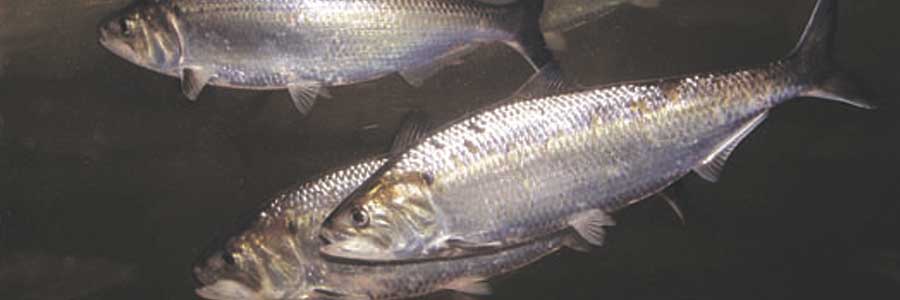
Toxic Sediments behind Some Dams are Poisoning Fresh Water Fish and Those Who Eat Them. The Department of Public Health has issued advisories urging limited consumption of fish in nearly every river in the state. Dams trap and concentrate contaminated sediments, which are ingested by invertebrates and then move up the food chain, becoming more lethal each step of the way. Dams Threaten Survival of Migratory Herring, Shad, and other “anadromous”ocean fish that must spawn (lay their eggs) in fresh water. Click here to learn more about anadromous fish and the keys to their survival. These fish are a major food source for prized sport and commercial fish like cod and striped bass. Dams in southeastern Mass that are threatening fish include:
Dams Limit Biodiversity of Freshwater Fish and Other Species and Impede Natural River Processes. Dams can eliminate cold water fish like trout by raising and slowing down river flow, increasing water temperature, concentrating pollutants, and reducing dissolved oxygen. Impoundments behind dams can reduce wetlands (which serve as fish nurseries and which moderate flooding and filter pollution), cause algae blooms, and block migration of turtles and other river dwellers. Dams Impede Recreational Boating. Massachusetts rivers have a dam every 1.2 miles, on average. These dams inhibit canoeing and kayaking by breaking up rivers and, when close to the coast, prevent boats from moving upstream from the ocean. When not well marked, they pose a serious danger to boaters. Stagnant water causes algae blooms that also impede boating and swimming. Most Massachusetts Dams Serve No Purpose and are Cheaper to Remove than Maintain. Nearly all of our dams were built decades or centuries ago for farming or for water power to run mills and factories and are now obsolete. Many of these are state owned and are costing taxpayers big money. For example, the T&H Dam on the Neponset River would cost taxpayers $3.6 million to maintain for 30 years, compared to $1.3 million to remove. What's being done locally that you can help with?Join with local people like yourself working on river restoration efforts occurring RIGHT NOW:
Watershed Associations throughout southeastern Massachusetts are also supporting dam removal legislation and funding. Rep. John Smizik’s “Sustainable Water Resources Act,” H. 834, which, among other good things, would require the Office of Dam Safety to consider environmental impacts when deciding what should be done with unsafe dams. Click here to learn more. Ancient "Fish Runs" Imperilled in MassachusettsSevere declines ocuring in ocean fish like herring that need access to fresh water to lay their eggs - Dozens of obsolete dams block their passage - Accidental “bycatch” by huge trawlers at sea is also a factorFor thousands of years, migratory salt water fish such as herring and shad swam far up Massachusetts’ coastal rivers each spring to fulfill their biological need to “spawn” (lay their eggs) in fresh water. Today these “anadromous” fish species are in steep decline because most of their spawning grounds are blocked by dams, and because of overfishing at sea, the decline in anadromous fish has also taken away a key food source for other popular sport and commercial fish, such as striped bass, bluefish and cod. Restoration of “fish runs” (the rivers and streams in which ocean fish migrate in order to spawn) is critically important, and would have a positive effect on the over-all health and vitality of rivers and streams, extending the range of eagles, osprey, and other birds and sometimes re-creating cold water trout streams.In Massachusetts and elsewhere in New England successful efforts are being made to restore our fish runs. You can join other people working right now to restore migratory fish to rivers and streams in southeastern Massachusettts - CLICK HERE to learn how! The history of migratory fish “runs” in Massachusetts. Herring, shad and other anadromous fish were once so plentiful in our rivers and streams in the spring-- forming virtually a solid mass from shore to shore -- that colonial farmers and Native Americans depended on them not only for food but also to fertilize their fields. In the seventeenth century, Israel Stoughton began to build a dam on the lower Neponset River to harness water power to run his mills (it was the second dam built in what is now the United States). So angry were upstream farmers from Norwood that they marched to Boston, where the dam was being built, and tried unsuccessfully to tear it down. So began the long battle waged first by farmers and now by ordinary citizens and fish biologists to remove dams. Removal of dams blocking fish runs. The best way to restore fish runs is to remove dams and other obstructions that are blocking their way. Most Massachusetts dams are old anyway, and no longer serve any purpose. CLICK HERE to learn more about the negative effects of dams on fish, public health, safety and the environment, and what’s being done about it by your local watershed association. There are some dams however that are still used for flood control and other purposes. Often people are living on the ponds that the dams have created. Alternatives to dam removal for restoring fish runs. Fish ladders and ramps are designed to get some adult fish species over dams in the spring and their offspring back to sea in the fall. They are often far less controversial than dam removal, especially where people are living on a pond behind a dam. Fish ladders and ramps are quite common and often highly successful in restoring fish runs, but not always. Oddly, these devices sometimes work on one river while being rejected by the same fish species on a similar river, and biologists don’t know why. Also, fish ladders and ramps frequently do not work for every species of fish that once spawned in a given river or stream. They may be used by strong swimmers like herring, be problematic for the more skittish shad, and be unusable for smaller fish like smelt. Nevertheless, there have been many successes in southeastern Massachusetts, including the fish ladder that gets herring around a dam on the Nemasket River (part of the Taunton River Watershed) in Middleboro, and so they should be carefully considered as an option for restoring fish runs when dam removal doesn’t seem to be politically feasible. Solving the “Bycatch” Problem. It won’t do a lot of good to recreate fresh water fish runs if herring and other anadromous fish are being slaughtered at sea by trawler fleets dragging football field size nets. Even though these trawlers are trying to catch entirely different species of fish, their accidental killing of river herring is imperiling commercial and recreational fish (such as cod and striped bass) that depend on river herring for food. That’s why a number of watershed associations in southeastern Massachusetts have joined small commercial fishermen and those who fish for sport in the “Herring Alliance.” The Herring Alliance is working for more far-sighed fishing methods that would eliminate or greatly reduce river herring bycatch at sea. CLICK HERE to learn what your local watershed association is doing to restore a fish run near you. Reduction of Water Pollution is a Major Goal of WAAThe American public is virtually unanimous in their support of stronger water protection. Yet there are so many sources of water pollution that it can be difficult to achieve that goal. As they do with stormwater, watershed associations generally concentrate most of their efforts dealing with local problems (identifying illegal discharges, commenting on permits for new projects, etc.). But we also work at the state, and sometimes even the federal level to try to change policy or increase enforcement of existing laws dealing with the following major sources of water pollution.Major Sources of Water PollutionStormwater runoff is responsible for about 60% of our water pollution, according to Massachusetts state environmental agencies. This includes bacteria from dog and other animal poop as well as illegal discharges of sewage to storm sewers; pesticides, fertilizers and herbicides from lawns and gardens; and gasoline, oil and trash from our streets. Click here to learn more about stormwater runoff and what we should do to control it.Low stream flows concentrate pollutants and make them far more dangerous. A drop of arsenic in a lake won’t hurt, but a drop in a glass can kill you. Many states have set water quality standards that take stream flows into account, but Massachusetts isn’t one of them, a situation we are trying to change. Click here to learn how we can maintain adequate, natural water levels in our rivers, streams, lakes and ponds. Sewage getting into our waterways from a variety of sources including:
The discharge of sewage from any of these sources into our surface water without treatment violates the Clean Water Acts, which should be strictly enforced. Inadequate treatment of industrial wastewater that is discharged directly into waterways or into sewer systems that discharge to waterways. While this problem is supposed to be controlled by federal surface water discharge permits, permit conditions are not always complied with and the EPA has inadequate staff to do comprehensive enforcement. Furthermore, many industries don’t even know what all the toxic chemicals are that they are using, and thus their treatment practices are often ineffective. Again, all these discharges violate the Clean Water Acts, which should be strictly enforced. Massachusetts regulations require industries to identify and report dangerous chemicals in their wastewater discharges to sewers, but the rules are not yet being implemented. This is unacceptable. Discharges of medicines and “personal care products” into our waterways are largely unregulated. In many cases it isn’t clear if they pose a real danger and, even if they do, effective treatment methods have not always been identified. Discharges of medicines into water bodies are particularly difficult to deal with; while some of them come from people flushing unused medicines down the toilet, a large percentage of the medicines we take are not absorbed by our bodies but rather are eliminated into our toilets. Addressing this problem has become a major new frontier for water pollution control. Dangerous toxic chemicals remain in the sediments below most old industrial rivers in Massachusetts, of which there are many. State law does not require that these chemicals be cleaned up except in two situations. First, if they pose an “imminent hazard” to human health (although MassDEP does not consider pregnant women and children eating contaminated fish they catch to pose an imminent hazard, as long as warnings have been posted along the shore by the local board of health). Or secondly, if the chemical can be traced to specific old industrial sites on the banks of the river, something that is extremely difficult to determine and even more difficult to prove. If the party responsible for toxic contamination of sediments beneath our rivers and streams cannot be identified, we believe that government has a moral responsibility to clean them up if they pose a substantial risk to public health or the environment. Mercury is still being introduced to our waterways at dangerous levels, mainly due to the burning of coal by power plants (most of them in the midwest). Only the federal government can effectively deal with this interstate problem. | |